

SHAVING IRRITATION: OUR EXPERIENCE AND RECOMMENDATIONS
The usual advice is to soften the beard, replace the blade regularly and apply a balm after shaving. All of this is sensible, but in practice it is often not enough.
After more than ten years of testing traditional safety razors, double-edge blades, shaving soaps and creams, and discussing the results with our customers, we have learned that shaving irritation is rarely caused by one thing alone.
Sometimes the problem is easy to identify. A modern multi-blade cartridge razor or an aerosol shaving foam may simply not suit the skin. But when someone has already moved to a traditional safety razor and prepares their own lather with a shaving brush, persistent irritation often comes down to smaller details.
NOT ALL LATHER IS THE SAME
The purpose of a shaving soap or cream is not simply to cover the face in white foam. It should soften the beard and create a sufficiently hydrated layer that allows the blade to move smoothly across the skin.
Different products can feel very different in use. Some produce a denser, firmer lather. Others create a softer, creamier and more silky cushion.
The difference is not determined only by whether the product is described as a soap or a cream. The complete formula matters, including the soap base, glycerine, oils, added water and other conditioning ingredients.
It would therefore be misleading to say that shaving soaps are always drier or that creams always provide better glide. Hard shaving soaps do, however, often require more careful preparation and closer control of the amount of water used. A soft shaving cream is usually quicker to work into a smooth, even lather.
The most important question is simple: does the razor glide easily, or does the lather begin to feel dry and sticky on the skin?
OUR RECOMMENDATIONS
SHAVING CREAMS
These are three of the shaving creams our customers return to most often. All three are easy to work into a smooth, comfortable lather and provide the glide needed for a close shave with less unnecessary friction.
Personal preferences naturally differ, and each cream feels slightly different in use. However, all three have proved to be reliable choices over time.
For this selection, we have also chosen their most popular fragrances, so the decision can be based not only on shaving performance, but also on the scent you enjoy most.
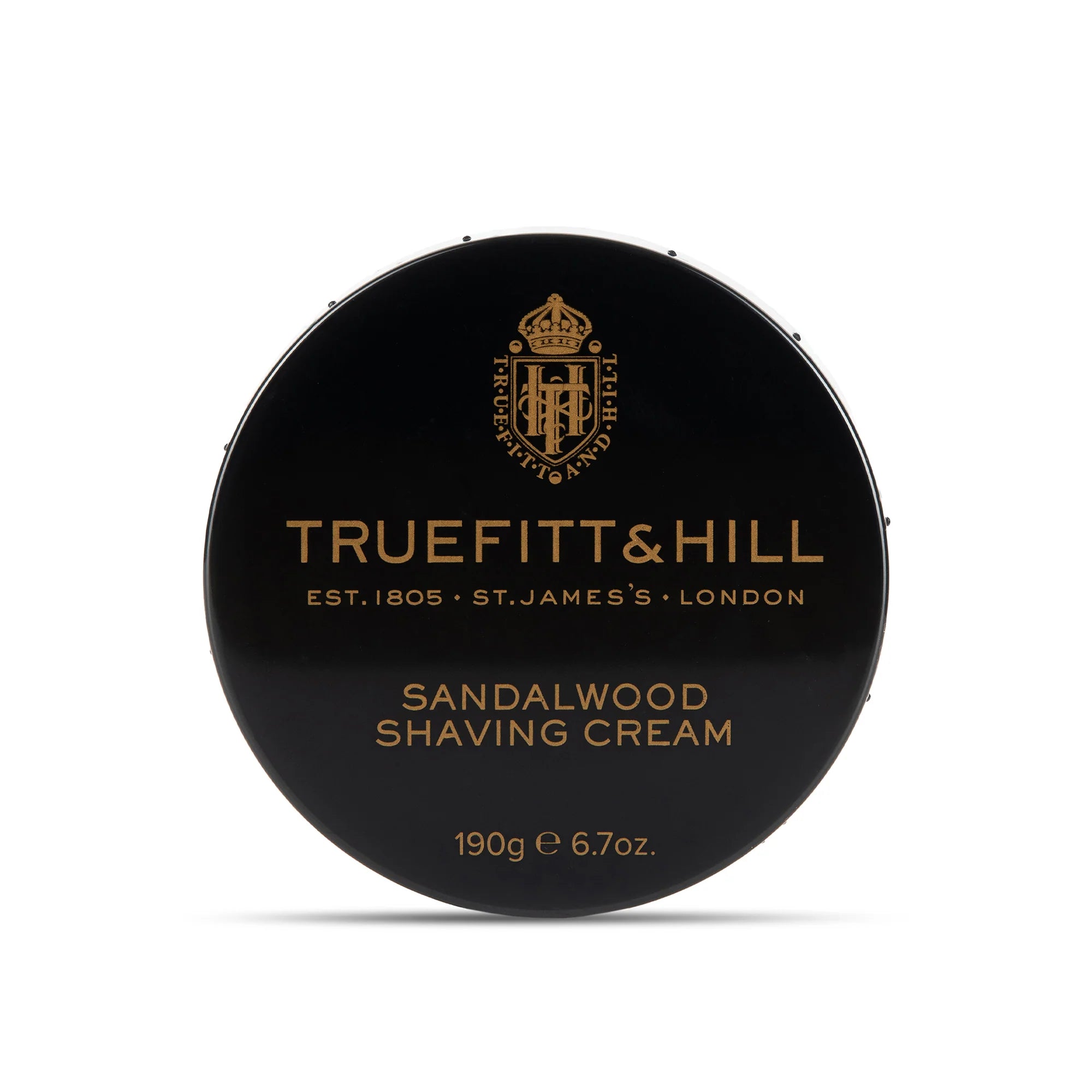
Truefitt & Hill
SANDALWOOD SHAVING CREAM
A rich, glycerin-based shaving cream that produces an easy lather with excellent glide and a comfortable cushion. Its particular strength is the refined fragrance, combining sandalwood, cedarwood and tonka with fresh notes of bergamot, lemon and melon.
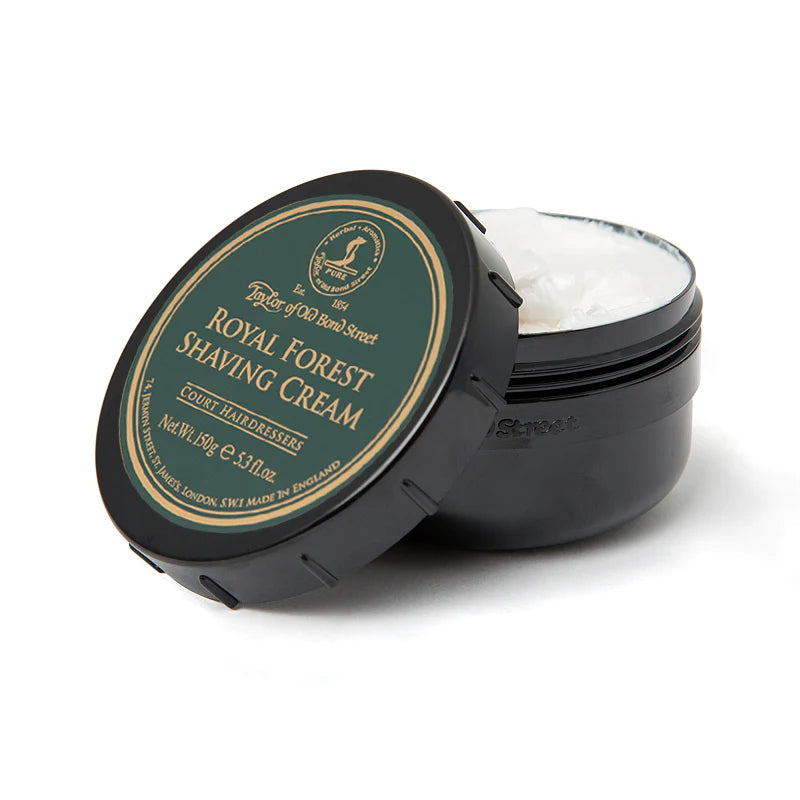
Taylor of Old Bond Street
ROYAL FOREST SHAVING CREAM
Particularly easy to work into a smooth, dense and creamy lather, with reliable glide throughout the shave. Royal Forest adds a fresh, green and subtly fruity fragrance, making it a good choice for those who value both performance and scent.
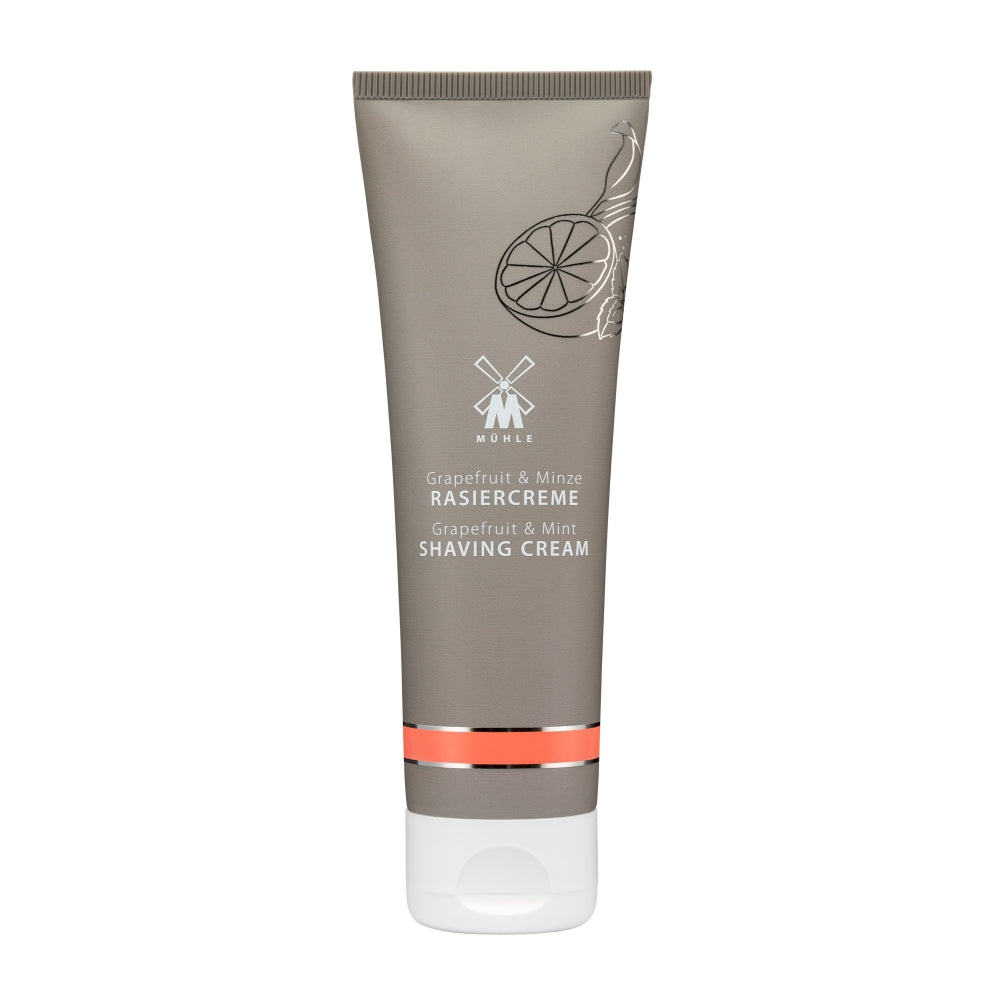
MÜHLE
GRAPEFRUIT & MINT SHAVING CREAM
A lighter-textured cream that quickly produces a smooth, creamy lather with excellent blade glide. Grapefruit and mint give it a fresh, lightly cooling character, balanced by black pepper, cedarwood, amber and vetiver. The formula contains glycerin, beeswax and menthol and is made without PEGs, parabens, silicones, mineral oil, colourants or microplastics.
THE AMOUNT OF WATER MATTERS TOO
Even a suitable product can produce poor lather if too little or too much water is used.
With too little water, the lather is usually thick, compact and firm. It may look impressive, but it can dry quickly on the skin and restrict the movement of the razor.
With too much water, the lather becomes thin, airy and prone to running off the face. It no longer forms a sufficiently even layer between the blade and the skin.
Properly prepared shaving lather should be:
- smooth and even;
- hydrated with a slight sheen;
- dense enough to remain on the face;
- soft enough for the razor to move through it without catching.
The amount of water is best adjusted gradually. Begin with a damp brush rather than one that is dripping wet. If the lather feels too thick or dry while it is being worked, lightly wet the tips of the brush and continue until the lather becomes smooth, hydrated and easy to spread across the skin.
OUR RECOMMENDATIONS
SHAVING BRUSHES
A shaving brush does more than simply create foam. It works water into the shaving soap or cream, helps produce a smooth and stable lather, distributes it evenly and works it into the beard so that the hairs are properly softened before the razor touches the skin.
We have selected three brushes at different price points. Each offers a different balance of softness, firmness, water retention, ease of care and handle quality, so the right choice depends on both your budget and the way you prefer to prepare your lather.
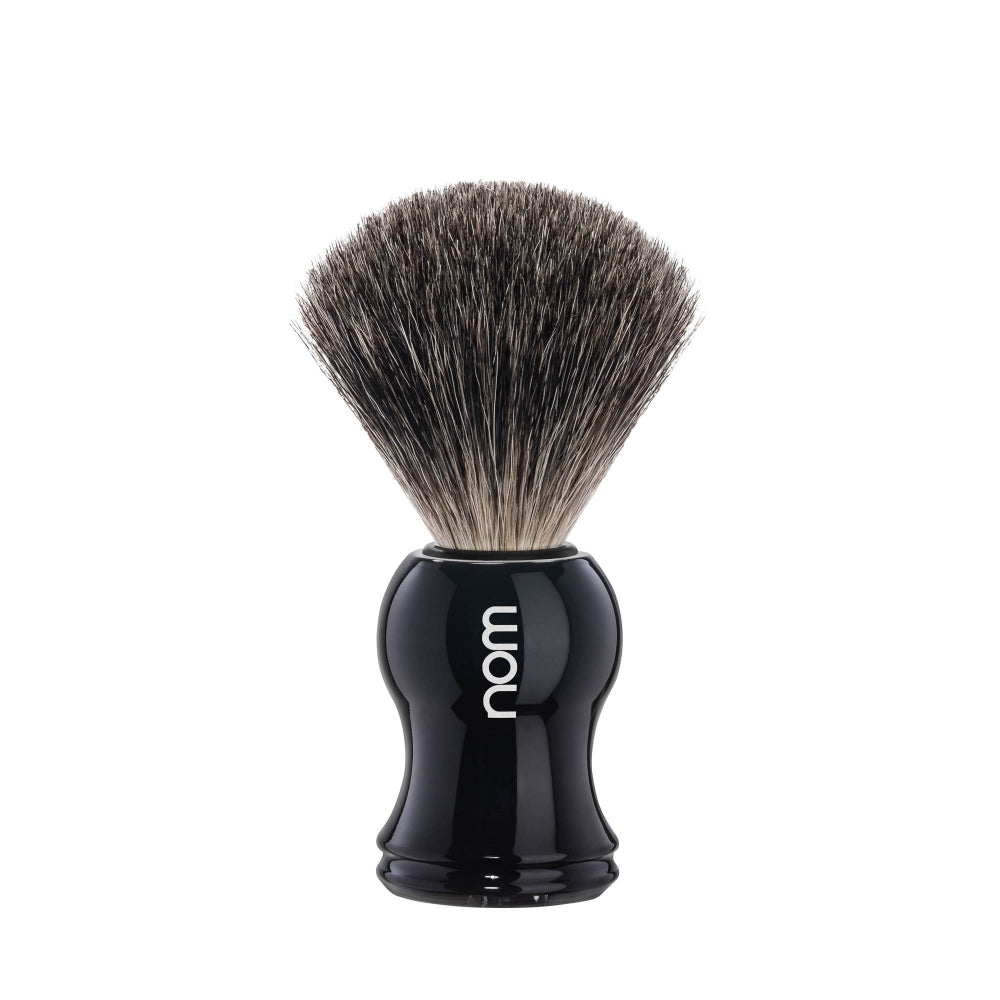
NOM
GUSTAV PURE BADGER SHAVING BRUSH
An affordable introduction to natural badger hair. The brush feels soft on the face, although its Pure Badger bristles have a slightly coarser texture than the two other brushes in this selection, giving a more noticeable massage while working the lather into the beard.
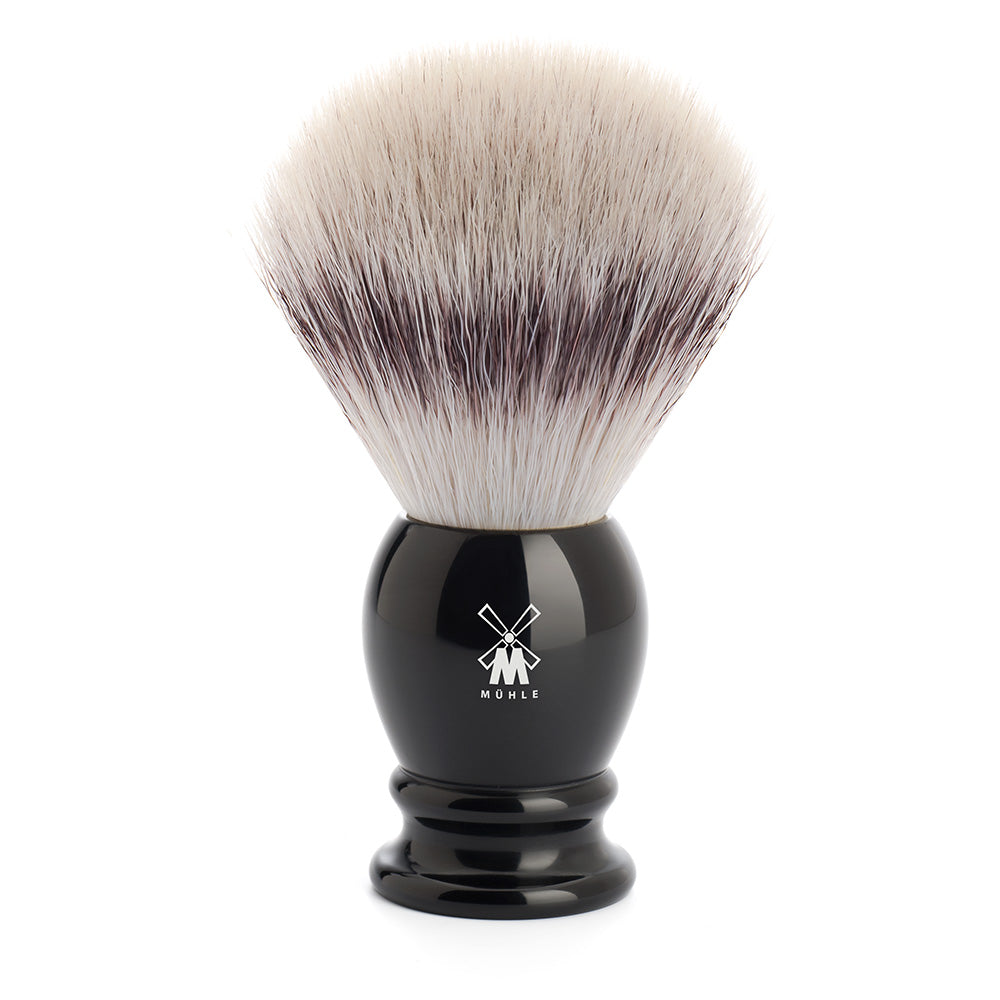
MÜHLE
CLASSIC SILVERTIP FIBRE SHAVING BRUSH
One of the best-value brushes in this selection. Silvertip Synthetic Fibre offers much of the softness and lathering performance associated with high-grade badger hair, while remaining firm and well-shaped when wet. It holds water well within the knot, produces a rich lather with relatively little soap or cream, dries quickly and is easy to maintain.
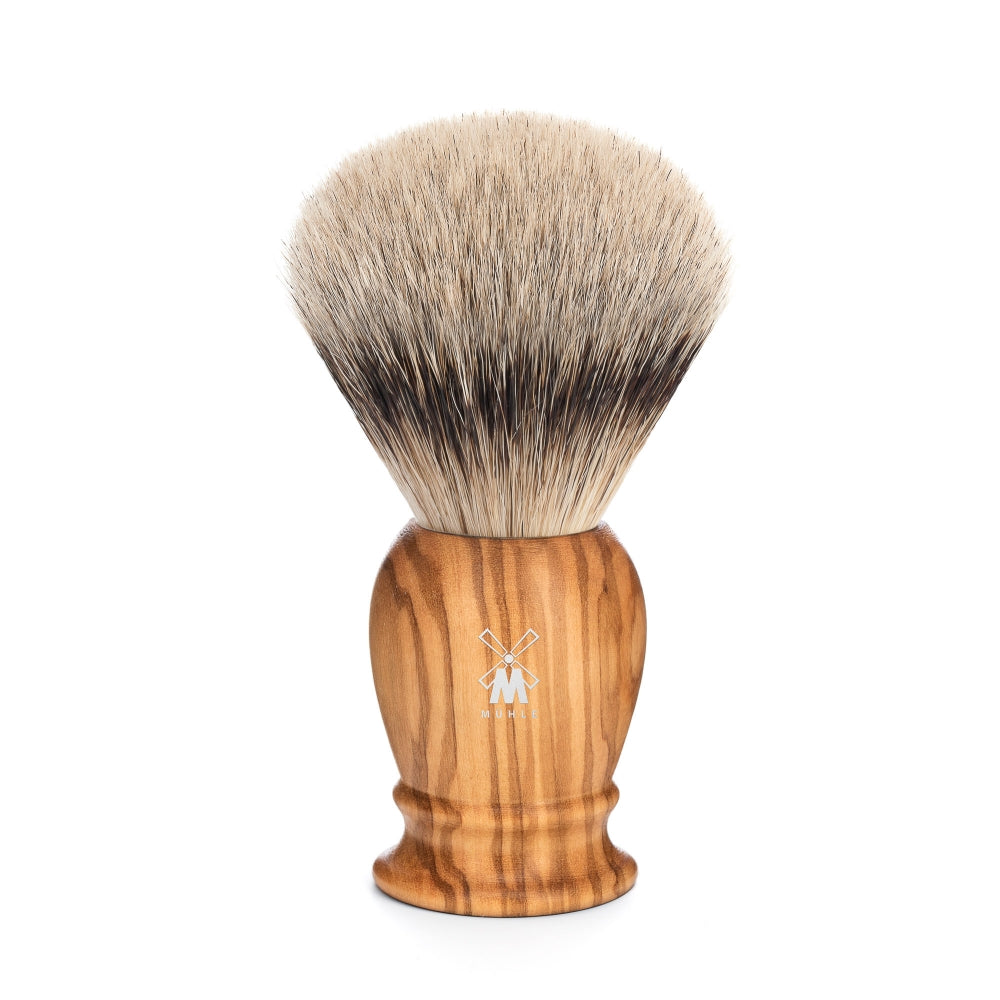
MÜHLE
CLASSIC SILVERTIP BADGER SHAVING BRUSH
The most refined natural-hair option in the selection. Its fine Silvertip Badger hair absorbs plenty of water and feels exceptionally soft and flexible on the face, helping to build a dense, creamy lather. The larger 23 mm knot and olive-wood handle also give it a fuller, more luxurious feel in use.
WATER CAN COMPLETELY CHANGE THE LATHER
The same shaving soap can behave differently from one home to another. Water hardness is one reason.
Hard water contains higher levels of calcium and magnesium. These minerals react with soap and form compounds that do not dissolve easily in water. As a result, the soap may be more difficult to lather, more product may be needed, and familiar deposits can build up on sinks, tiles and shaving equipment.
This may also explain why the lather can feel drier, firmer or more inclined to cling to the skin and brush. This does not mean that hard water itself is necessarily causing the shaving irritation. It means that it changes the way a particular soap or cream lathers and feels during the shave.
Soap usually lathers more easily in soft water, and less product may be required. The lather can also feel more slippery, while the skin may seem to take longer to rinse completely clean.
The effect of water hardness is often most noticeable with traditional shaving soaps. Creams may respond differently because their formulas already contain more water, glycerine, oils and other ingredients that influence texture and glide.
THE RAZOR AND BLADE MUST WORK TOGETHER
Traditional safety razors are not all alike. The construction of the razor head, blade gap, blade exposure and the angle at which the edge meets the beard and skin can all vary.
The razor itself, however, is only part of the result. Different blades can feel completely different when used in the same razor.
A very sharp blade may cut through coarse beard growth with little effort, but it may be less forgiving of an incorrect angle or excessive pressure. A milder blade may feel more comfortable on sensitive skin, but with a particularly coarse beard it may require additional passes.
Every extra pass means another contact between the blade and the skin.
There is therefore no single best blade for everyone. The blade needs to suit the razor, the beard and the user’s shaving technique.
When a razor feels too harsh or uncomfortable, it is often worth trying another blade before replacing the razor itself.
OUR RECOMMENDATIONS
THE CLOSEST SHAVE IS NOT ALWAYS THE BEST SHAVE
One man can shave extremely close without any discomfort. Another may experience redness, burning or ingrown hairs after achieving the same result.
Skin sensitivity varies, as do beard thickness, density, curvature and growth direction. The quality of a shave should therefore not be judged only by how smooth the skin feels immediately afterwards.
In our view, the best shave is one that still feels comfortable several hours later and the following day.
If the skin regularly becomes inflamed, there is little benefit in shaving against the direction of growth at any cost or repeatedly passing over the same area to achieve a perfectly smooth finish.
AFTERSHAVE LOTION OR BALM: WHAT IS THE DIFFERENCE?
Shaving can leave tiny, invisible disruptions in the surface of the skin. For some men, particularly those who tend to develop small inflamed spots after shaving, an alcohol-based aftershave lotion may be suitable.
Alcohol has antimicrobial properties. Depending on its concentration and the complete product formula, an aftershave lotion may help reduce the number of microorganisms on freshly shaved skin and provide a more hygienic post-shave treatment.
In our experience, alcohol-based aftershave lotions often produce better results for men who are prone to small areas of inflammation after shaving. However, a cosmetic aftershave lotion should not automatically be treated as a medical disinfectant. Alcohol content and the rest of the formula vary considerably between products.
It is also important to understand that not every post-shave bump is caused by microorganisms. Bumps can also result from ingrown hairs, shaving too close or repeatedly shaving the same area. In those cases, changing the shaving technique, razor or blade is more important.
An aftershave balm has a different purpose. It helps moisturise the skin, reduce feelings of dryness and tightness, and support the recovery of the skin barrier.
When the skin responds well to an alcohol-based lotion but also requires additional moisture and care, the lotion can be applied first, followed by a balm once it has dried.
A balm should not be chosen simply because the label says “aftershave balm”. It is worth asking which ingredients are responsible for its skin-care benefits. For example:
- glycerine helps the skin retain moisture;
- panthenol supports hydration and the recovery of the skin barrier;
- allantoin and bisabolol are commonly used to improve skin comfort;
- aloe vera is often included in hydrating and soothing formulas.
Aftershave lotion and balm are therefore not interchangeable. A lotion may help provide a more hygienic treatment for freshly shaved skin, while a balm supplies moisture and additional skin care.
SHAVING MISTAKES CAN FEEL MORE NOTICEABLE IN SUMMER
During warmer weather, freshly shaved skin is more likely to come into contact with sweat, sunscreen, repeated cleansing and friction from a shirt collar.
This makes a properly hydrated lather particularly important in summer, together with a post-shave product that actively supports the skin’s recovery.
The same principles remain relevant throughout the year. In winter, the skin is affected by cold weather, wind and dry indoor air instead.
OUR MAIN ADVICE: CHANGE ONE THING AT A TIME
When the skin regularly feels sore after shaving, avoid replacing the razor, blade, soap and balm all at once. Otherwise, it becomes impossible to identify what has improved the result.
Begin with the lather:
- Add slightly more water.
- Observe whether the lather remains hydrated for longer.
- Try a different shaving cream or soap.
- Then test another blade.
- Only after that consider changing the razor.
- Assess the aftershave product separately.
When choosing shaving products, it is always worth asking one question: why should this particular product suit my beard and skin?
In our store, we can help you select a traditional safety razor, blades and shaving products based on your previous experience, beard type and the way your skin responds after shaving.
A BETTER SHAVE, BEAUTIFULLY PUT TOGETHER
Traditional shaving is not only about finding the right technical setup. The tools we use every day can also be well made, visually pleasing and enjoyable to keep in the bathroom.
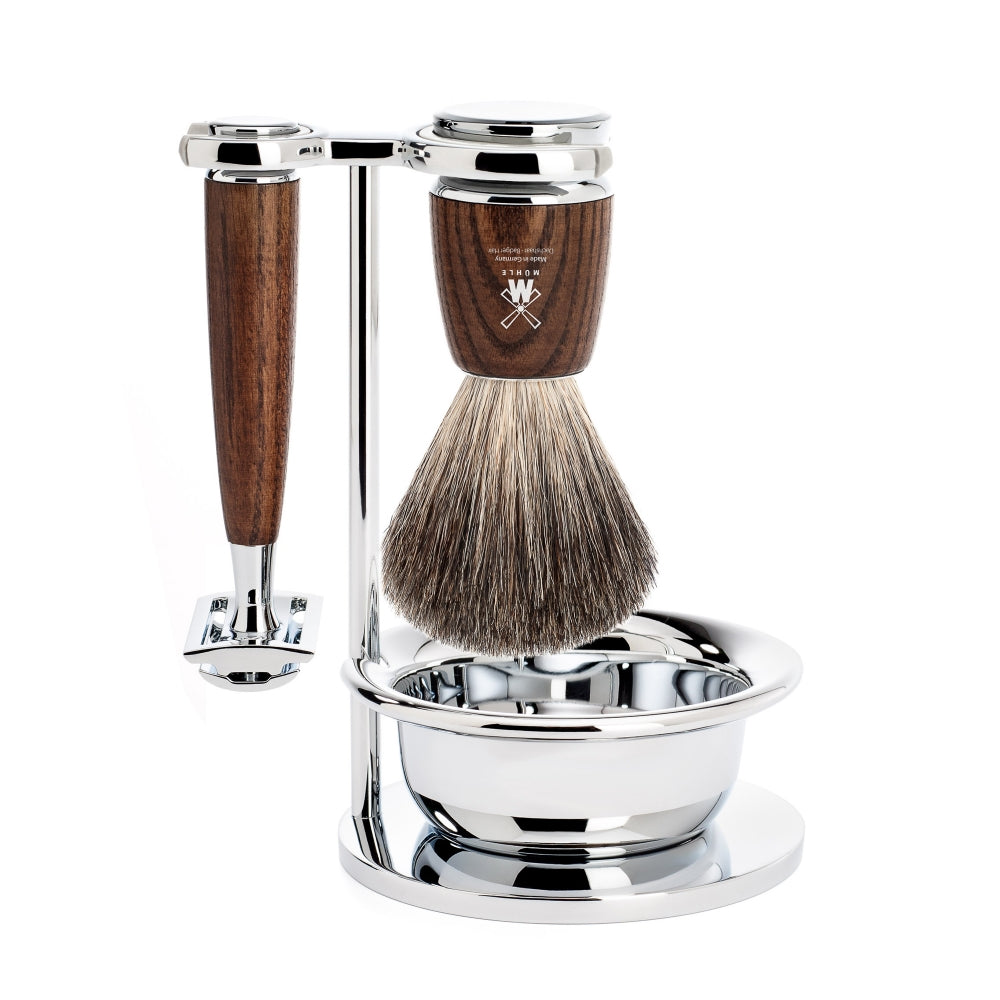
More than a practical shaving setup, RYTMO is a visually considered set that brings together a closed-comb safety razor, Pure Badger shaving brush, matching stand and shaving bowl. The combination of steamed ash wood and polished chrome gives it a distinctive, well-finished appearance, while the complete set offers an accessible way to acquire the essential tools for traditional wet shaving.
SPOTS GROOMING
NEED HELP FINDING THE RIGHT SHAVING SETUP?
If you are unsure which razor, blade, shaving soap or aftershave product will work best for your beard and skin, visit us at:
SPOTS Miesnieku 14, Riga
This is where you will find our traditional shaving range, including safety razors, double-edge blades, shaving brushes, soaps, creams and aftershave products.
We can help you compare different options and understand why a particular razor, blade or formula may be better suited to your beard, skin and current shaving routine.